YICHANG, China, Oct. 23, 2026 /PRNewswire/ -- Angel Yeast (SSE: 600298), one of the world's leading yeast manufacturers, has hosted the 2026 International Synthetic Biology Symposium and the Angel Group High-Quality Development Conference in Yichang, its headquarters city, on October 19–20, 2026, as part of the company's 40th anniversary celebrations.
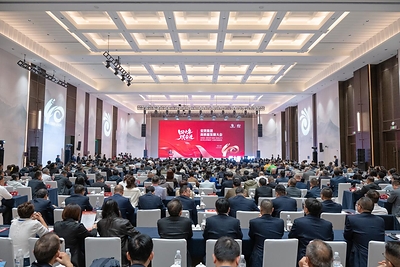
As a highlight of Angel Yeast's 40th anniversary, the event convened over 500 global industry partners, including academicians, experts, scholars, supplier representatives, and customer delegates from China and abroad. It offered a platform to discuss biomanufacturing and synthetic biology trends, industrial innovation, and global supply chain collaboration, showcasing Angel Yeast's strategy of deepening international cooperation through innovation, openness, and localized operations.
The event was both a celebration of Angel Yeast's journey and a launchpad for global partners to deepen biomanufacturing collaboration and shape future growth together.
At the High-Quality Development Conference, Angel Yeast reflected on its journey from starting as an edible yeast pilot base to becoming the world's second-largest producer by sales volume. Today, its products reach 170+ countries and regions, serving 30,000+ customers worldwide with over 20% market share.
In innovation, Angel Yeast has built an industrial microbial strain bank and mastered key technologies in strain selection, cell factory construction and multi-carbon source fermentation. The company invests over USD 149.8 million in R&D annually, employs more than 1,500 researchers, and collaborates with over 70 research institutes worldwide.
Angel Yeast has cumulatively obtained 534 authorized invention patents, with 12 scientific and technological achievements reaching international leading levels. The company has continuously optimized its market layout and refined a research-and-sales synergy mechanism adapted to its new development stage composing of 4 business segments, 6 overseas business divisions and 8 technology centers.
Globally, Angel Yeast operates a multi-regional production and R&D network. Its Egypt plant, after two expansions, is now the world's largest yeast factory, while its new Indonesia plant is set to begin production in Q1 next year. Overseas factories and subsidiaries employ nearly 2,000 foreign staff, with a localization rate exceeding 95%.
Angel Yeast is committed to a circular economy industrial chain: raw materials sourced from agricultural processing, core products serving food health and safety, and by-products feeding back into agriculture. It has built five National Green Factories and one zero-carbon factory, with its Ecovadis rating in the global top 15%. The company also participates in setting international standards, including the Codex Alimentarius standard for yeast products, driving the coordinated global expansion of its products, technologies, standards, and brand.
"Looking ahead, Angel Yeast will vigorously develop new synthetic biology technologies, focusing on new tracks such as future foods, biomedicine, enzyme catalysis and new materials, and agricultural microbiology. We will build a 'biomanufacturing+' industrial cluster, continuously propel the industrial chain toward the high end of the value chain, and strive to build a world-class biotechnology company," remarked Xiong Tao, Chairman of Angel Yeast.
 View original content to download multimedia:https://www.prnewswire.co.uk/news-releases/angel-yeast-marks-40th-anniversary-setting-its-sights-on-becoming-a-global-biotech-powerhouse-302917986.html

Die Innenministerkonferenz (IMK) der Länder hat ihr seit 1954 praktiziertes Einstimmigkeitsprinzip aufgegeben und setzt künftig auf Mehrheitsentscheidungen. Beschlüsse gelten nun als gemeinsame Linie der Länder, wenn mindestens 13 der 16 Innenministerinnen und Innenminister zustimmen. Die Neuregelung wurde nach Angaben eines Sprechers des Gremiums im schriftlichen Umlaufverfahren beschlossen und gilt ab sofort.
Auslöser für den Kurswechsel ist die Möglichkeit, dass in kommenden Landesregierungen die AfD das Innenressort übernehmen könnte. In Sachsen-Anhalt hatte ihr Spitzenkandidat Ulrich Siegmund zuletzt erklärt, er wolle sich im Dezember zum Ministerpräsidenten wählen lassen – ein Schritt, der eine Regierungsbildung mit AfD-Beteiligung als realistische Option erscheinen lässt. Nach der bisherigen Praxis hätte ein Land mit einem AfD-Innenminister im Zweifel IMK-Beschlüsse blockieren können.
Mit der Abkehr von der Einstimmigkeit wollen die übrigen Länder nach übereinstimmenden Angaben verhindern, dass ein einzelnes Ressort – unabhängig von der parteipolitischen Farbe – zentrale Positionierungen in Fragen der inneren Sicherheit ausbremst. Bislang sollte die Einstimmigkeit sicherstellen, dass kein Land bei sensiblen Themen überstimmt wird; ein Veto oder auch eine Enthaltung konnten Beschlüsse stoppen, abweichende Positionen wurden im Protokoll dokumentiert. Künftig soll bereits eine breite, aber nicht mehr vollständige Zustimmung als ausreichend gelten, um einen länderübergreifenden Standpunkt zu formulieren.
Formal bleibt die IMK ein informelles Gremium ohne gesetzliche Grundlage. Sie ist weder im Grundgesetz noch in Bundes- oder Landesgesetzen verankert und verfügt über keine geschriebene Geschäftsordnung. Gleichwohl entfalten ihre Beschlüsse beträchtliche Wirkung, weil sie in den Ländern politisch aufgegriffen und umgesetzt werden. Mit der nun eingeführten Mehrheitsregel verschiebt sich das Machtgefüge innerhalb dieser Runde: Konsens bleibt möglich, ist aber nicht mehr Voraussetzung dafür, dass die Innenminister gemeinsam handeln.