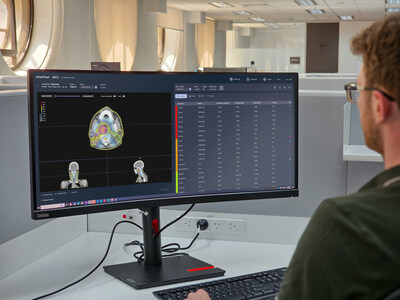
SYDNEY, May 14, 2026 /PRNewswire/ -- Leading Australian cancer care provider, GenesisCare, is pleased to be collaborating with SeeTreat to enable suitable cancer patients access to the latest technology in offline adaptive treatment assessment. SeeTreat's ART.1 software will be rolled out at GenesisCare from July 2026 to support automated, adaptive treatment evaluation for eligible patients.
GenesisCare Chief Medical Officer, Dr Marcus Dreosti, explains that "whilst radiation treatment is proven to be a safe and highly effective cancer treatment, unwanted toxicities and side effects can occur due to changes in a patient's anatomy over the course of treatment. Optimising treatment post commencement, called 'adaptive radiotherapy', is labour intensive and complex. We're excited that through this collaboration with SeeTreat, we now have the opportunity to make adaptive radiotherapy more accessible for patients across our Australian network."
GenesisCare's decision to implement the SeeTreat ART.1 tool follows a multidisciplinary study of the software on 64 head and neck, breast, and prostate cancer patients treated on their mixed vendor linac platform assessing accuracy, efficiency and patient impact. The study showed significant potential benefits to standardising and scaling adaptive workflows, providing actionable insights to clinicians when they need it.
Radiation Oncologist, Dr Melanie Jackson, shares: "ART.1 is proving to be an easy-to-use tool to help me identify which of my patients would benefit from a new treatment plan and when this is optimal. The efficiency of the software and personalisation of care ensures we match our clinical team's effort and valuable resource time to achieve the best possible patient outcomes."
SeeTreat CEO and Founder, Dr Trang Nguyen said "GenesisCare is a truly patient-centric and innovative organisation with passionate doctors and clinical staff constantly striving to deliver the best care possible. Working with the GenesisCare team is a pleasure and we're proud to be collaborating with the group."
SeeTreat's ART.1 software has UKCA mark, CE mark, Australian ARTG registration and is FDA pending.
About SeeTreat
SeeTreat is doctor backed, physics led, software medical device company founded in 2023, led by Dr Trang Nguyen, Antonia Dalton and Professor Paul Keall. Our vision is to reduce the burden of cancer through broadly accessible software technology improving quality and accuracy of treatment. SeeTreat is a global company with a current install base in the UK, Europe, USA and Australia.
For more information visit https://www.seetreatmedical.com/ and follow SeeTreat on LinkedIn https://www.linkedin.com/company/seetreat-medical
About GenesisCare
GenesisCare is a proudly Australian-run cancer care provider, specialising in radiation therapy with a growing footprint in medical oncology, theranostics and personalised medicine. Our relentless pursuit for better care is reflected in our advanced treatment techniques, technology and contemporary service experience.
Our dedicated research team partners globally to be first movers in bringing clinical innovations to patients close to home.
Over 35,000 people a year entrust us with their care across more than 50 locations nationally.
Photo - https://mma.prnewswire.com/media/2978722/Supporting_Image.jpg
 View original content:https://www.prnewswire.co.uk/news-releases/genesiscare-and-seetreat-to-bring-personalised-offline-adaptive-monitoring-to-more-than-40-radiation-oncology-centres-across-australia-302770327.html

Thyssenkrupp zieht beim geplanten Verkauf seiner Stahlsparte an den indischen Konkurrenten Jindal vorerst die Reißleine. Beide Unternehmen haben vereinbart, die seit September laufenden Gespräche auszusetzen. Nach Angaben des Essener Industriekonzerns soll die Neuaufstellung von Thyssenkrupp Steel nun aus eigener Kraft konsequent weiterverfolgt werden. Konzernchef Miguel López betonte, die Voraussetzungen für eine profitable Fortführung des Geschäfts seien „so gut wie lange nicht mehr“.
Im Hintergrund steht ein deutlicher Stimmungsumschwung im europäischen Stahlsektor. Thyssenkrupp verweist auf „große Fortschritte bei der Neuausrichtung“ des Segments und ein deutlich verbessertes Umfeld. Die Europäische Union habe die Bedeutung der Stahlproduktion für die Resilienz industrieller Wertschöpfungsketten erkannt und den Willen bekundet, die europäische Stahlindustrie stärker gegen globale Überkapazitäten und Dumping abzuschirmen. Zudem will Brüssel die Umstellung auf eine klimafreundliche Stahlproduktion weiter unterstützen.
Auch operativ hat sich die Lage bei Thyssenkrupp Steel zuletzt aufgehellt. Die Sparte, historischer Kern des Ruhrkonzerns, legte im laufenden Geschäft zu. Parallel läuft jedoch ein tiefgreifender Umbau: Zur Sanierung des Bereichs sollen in den kommenden Jahren bis zu 11.000 der rund 26.000 Stellen gestrichen oder ausgelagert werden. López hatte bereits zuvor erklärt, je erfolgreicher die Neuausrichtung umgesetzt werde, desto attraktiver werde das Stahlgeschäft für Kapitalmarkt und Investoren – „ob mit oder ohne Jindal“.
Der vorläufige Verkaufsstopp bedeutet keinen endgültigen Verbleib der Stahlsparte im Konzern. Mittelfristig hält Thyssenkrupp an dem Ziel fest, sich vom Stahlgeschäft zu trennen. Gewerkschaften wie die IG Metall drängen derweil auf Klarheit und fordern ein Ende der Verkaufsüberlegungen ohne „Hintertür“. Sie verlangen Gespräche über ein Modell, mit dem sich der Stahlbereich eigenständig und aus eigener Kraft verselbstständigen könnte. Während frühere Versuche für einen Verkauf, ein Joint Venture oder einen Börsengang gescheitert sind, setzt das Management nun darauf, den Wert des Bereichs vor einem möglichen nächsten Schritt weiter zu steigern.