Revolutionary design will bring Arm-native applications to IBM's flagship mainframes and servers, broadening software choice for enterprise computing
ARMONK, N.Y., Aug. 24, 2026 /PRNewswire/ -- At the annual Hot Chips conference, IBM (NYSE: IBM) today is announcing the first dual-architecture mainframe processor, which is being designed to enable enterprises to run operating systems and applications on both the IBM and Arm® compute platforms in future IBM Z and LinuxONE systems. This marks the first processor milestone to emerge from the IBM and Arm collaboration established in April 2026, and represents a significant advance in enterprise computing. The new processor is being developed to allow organizations to run Arm-native Linux environments simultaneously with z/OS and Linux on IBM Z, while benefiting from IBM's established security, reliability, and scale.
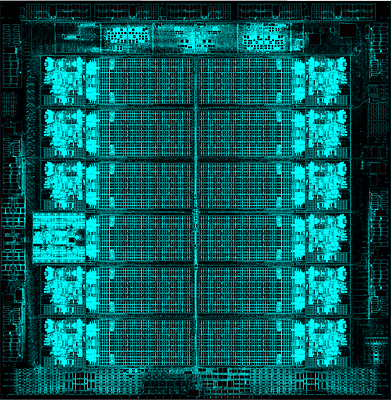
With more than 22 million developers worldwide, the Arm software ecosystem supports a broad and growing range of applications from cloud to edge, including the cloud-native and AI software increasingly shaping modern infrastructure. This new processor will bring that ecosystem to the IBM platforms known globally for transaction processing and data-intensive operations. Arm workloads will benefit from IBM's enterprise-grade capabilities, including enhanced reliability, hardware-level fault detection and recovery, advanced encryption, secure key management, and AI acceleration.
Built on a 2 nanometer technology node, the processor's design will contain 11 high-performance cores operating at more than 5.7 GHz, AI inference accelerators for in-transaction fraud detection, a dedicated on-chip data processing unit for I/O acceleration, and a large cache architecture for demanding enterprise workloads. The chip is architected to not contain separate Arm and IBM cores: each processor core can natively execute Arm and IBM Z, or Arm and LinuxONE, instructions concurrently while prioritizing the platform's established performance, security, encryption, and availability characteristics. IBM Z and LinuxONE platforms are capable of scaling to hundreds of cores and tens of terabytes of memory.
"As organizations modernize their application portfolios and integrate AI into core business operations, they need infrastructure that expands their options," said Christian Jacobi, Chief Technology Officer and IBM Fellow, IBM Systems Development. "This processor represents a significant architectural advancement for IBM Z and LinuxONE. By bringing Arm natively to our platform, we're combining access to one of the industry's fastest-growing software ecosystems with the qualities that have made IBM systems the foundation for how businesses run today."
"As AI scales, more of the computing landscape is converging on Arm," said Mohamed Awad, Executive Vice President, Cloud AI, Arm. "IBM Z and LinuxONE power some of the world's most demanding workloads in highly regulated industries. Bringing Arm compute and its software ecosystem to these platforms will extend that momentum into mission-critical enterprise infrastructure to give organizations greater choice in how they deploy AI."
This milestone represents a major step forward in IBM and Arm's shared vision of expanding application choice and access to the latest in software innovation for enterprise computing without compromising the capabilities these environments demand.
Statements regarding IBM's future direction and intent are subject to change or withdrawal without notice, and represent goals and objectives only.
Additional Sources
About IBM
IBM is a leading provider of global hybrid cloud and AI, and consulting expertise. We help clients in more than 175 countries capitalize on insights from their data, streamline business processes, reduce costs and gain the competitive edge in their industries. Thousands of governments and corporate entities in critical infrastructure areas such as financial services, telecommunications and healthcare rely on IBM's hybrid cloud platform and Red Hat OpenShift to affect their digital transformations quickly, efficiently and securely. IBM's breakthrough innovations in AI, quantum computing, industry-specific cloud solutions and consulting deliver open and flexible options to our clients. All of this is backed by IBM's long-standing commitment to trust, transparency, responsibility, inclusivity and service. Visit www.ibm.com for more information.
Media Contact
Bethany Hill McCarthy
bethany@ibm.com
IBM
 View original content to download multimedia:https://www.prnewswire.co.uk/news-releases/ibm-unveils-next-generation-dual-architecture-processor-for-ibm-z-and-linuxone-302857818.html

Im Land Bremen beginnt nach den Sommerferien ein Pilotprojekt, das den Arbeitsalltag von Lehrkräften grundlegend verändern könnte. An neun ausgewählten Schulen erfassen die Lehrerinnen und Lehrer künftig ihre gesamte Arbeitszeit digital – weit über die bisher dokumentierten Unterrichtsstunden hinaus. Bildungsenator Mark Rackles (SPD) spricht von einem Schritt, der Schule "perspektivisch" verändern werde. Erste Auswertungen des Testlaufs werden für Ende 2027 oder Anfang 2028 erwartet.
Hintergrund ist die gewachsene Bandbreite an Aufgaben, die im bisherigen System kaum abgebildet wird. Neben Unterricht kommen Elternarbeit, Team- und Gremienarbeit, Konferenzen, Schulentwicklungsprojekte sowie Fahrten hinzu. Lehrkräfte berichten zudem von regelmäßigem Arbeiten am Abend oder am Wochenende, etwa für Vorbereitung, Korrekturen oder digitale Kommunikation mit Eltern und Schülerinnen und Schülern. Nach Ansicht des Senats soll diese Belastung künftig sichtbar und systematisch erfasst werden.
Technisch setzt Bremen auf ein digitales Tool, auf das Lehrkräfte per Smartphone oder Rechner zugreifen können. Sie tragen Datum, Uhrzeit und Art der Tätigkeit ein – zur Auswahl stehen Kategorien wie "Unterricht", "Coaching" oder "Austausch"; auch Abwesenheiten durch Krankheit oder Urlaub werden eingepflegt. Das Projekt ist auf ein gesamtes Schuljahr angelegt. In einer Einführungsphase lernen Lehrkräfte die Anwendung kennen, anschließend analysieren Projektgruppen erste Ergebnisse und suchen insbesondere mit stark belasteten Lehrkräften das Gespräch, um gegebenenfalls Anpassungen vorzunehmen.
Politisch und arbeitsrechtlich geht es um mehr als ein Softwareprojekt. Nach einem Urteil des Bundesarbeitsgerichts von 2022 müssen alle Arbeitnehmerinnen und Arbeitnehmer – und damit auch Lehrkräfte – ihre Arbeitszeit erfassen. Der Bremer Testlauf soll daher grundsätzliche Fragen klären: In welchem Umfang ist Wochenendarbeit zulässig? Wie wird eine Klassenfahrt bewertet? Wie lassen sich Teilzeitmodelle, Datenschutz und Gestaltungsspielräume bei der Arbeitszeit unter einen Hut bringen? Rackles betont, das Vorhaben sei nicht nur für Bremen gedacht, sondern solle Erkenntnisse für alle Bundesländer liefern.